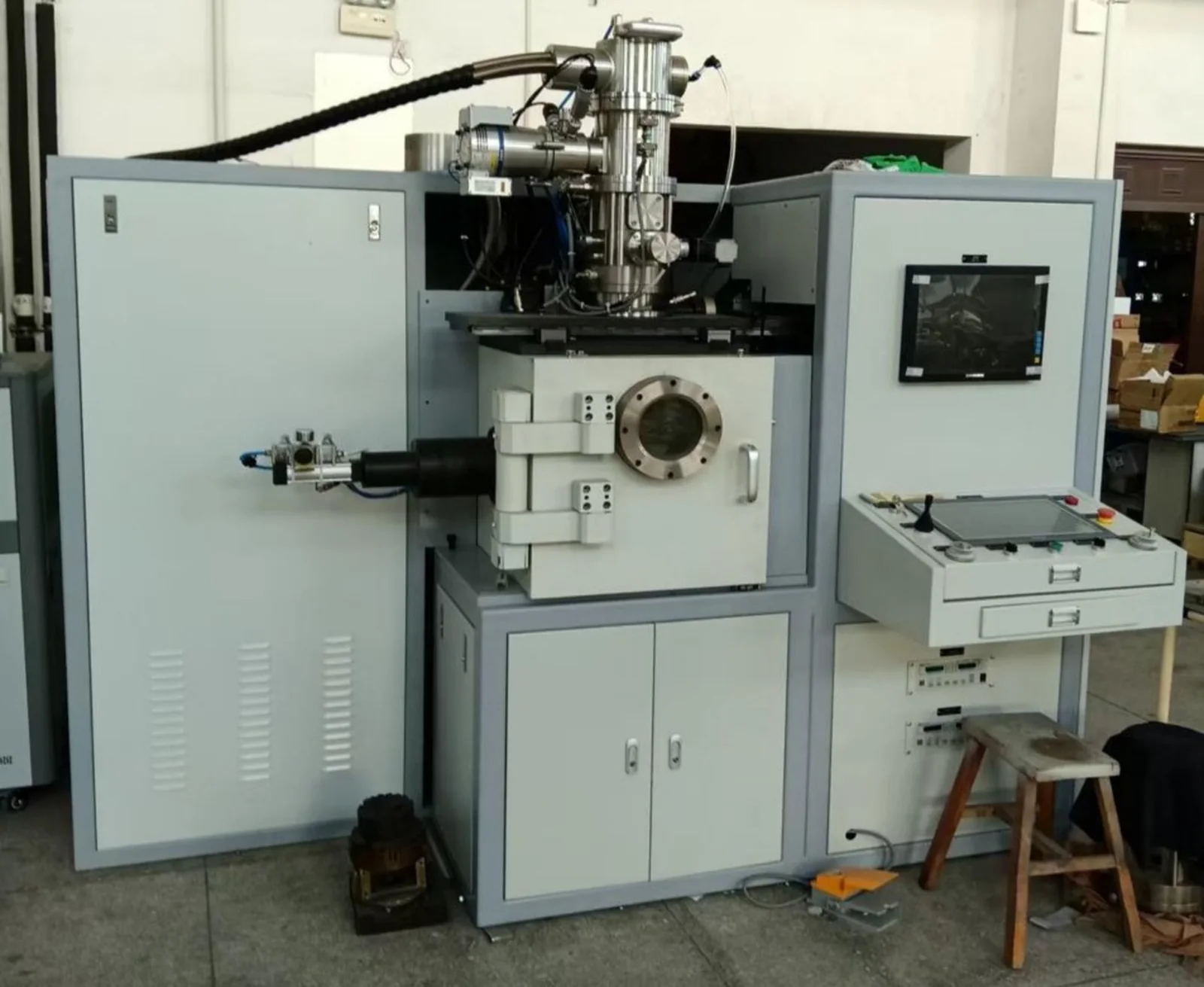
A high-vacuum electron beam welding system built around a 6 kW triode gun. A focused beam delivers up to 20 mm penetration in stainless steel in a single pass, at a depth-to-width ratio above 13:1, with the narrow heat-affected zone and zero oxidation that only a vacuum process gives you. Both vertical and horizontal circular seam welding are supported, driven by a 300 × 300 × 300 mm chamber with independent horizontal and vertical rotary tables.

The numbers that decide whether this machine fits your part. Tell us your material, wall thickness and joint geometry — we confirm the gun, chamber size and rotary table configuration on the proforma invoice rather than quoting a generic catalogue figure.
| Max. electron gun power | 6 kW |
| Welding penetration | Up to 20 mm in stainless steel, single pass |
| Depth-to-width ratio | > 13 : 1 |
| Accelerating voltage | 0–60 kV, continuously adjustable, stability ≤ ±0.2% |
| Beam current | 0.1–100 mA, minimum adjustment 0.1 mA, stability ≤ ±0.2% |
| Welding chamber | 300 × 300 × 300 mm (X × Y × Z), wall ≥ 38 mm |
| Vacuum level | Better than 5 × 10⁻² Pa; chamber pump-down ≤ 150 s |
| Welding modes | Vertical circular seam · horizontal circular seam |
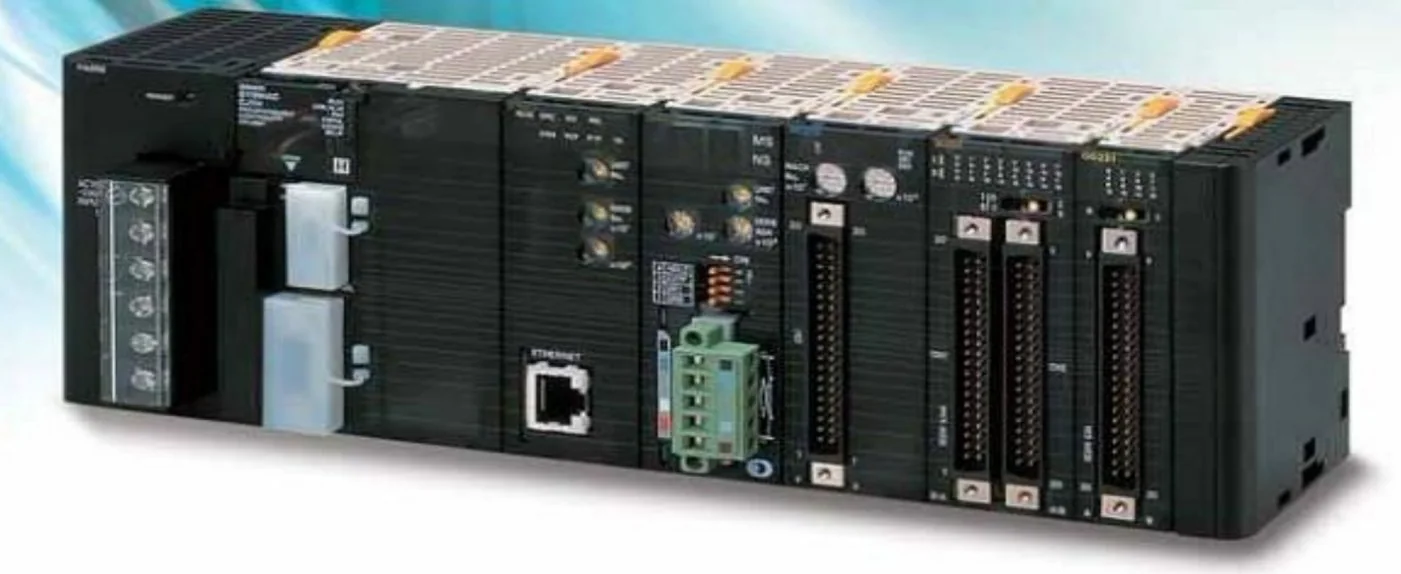
| Control | OMRON PLC + industrial touch screen, recipe & diagnostics |
| Overall volume (approx.) | ≈ 19 m³, packing volume for one complete unit |
| Machine weight (approx.) | 3,700 kg |
| Installed load | Max. 30 kW · 380 V ±10% · 3 phase · 50 Hz |
* Specifications as supplied for this model. Final configuration confirmed on the proforma invoice.
Full parameter set of the gun, high-voltage supply, vacuum system, motion axes and control — the same data we hand to your process engineer before a purchase order.
Triode gun · flip-open · directly heated · oil-cooled
| Max. power | 6 kW |
| Welding penetration | 20 mm (stainless steel) |
| Depth-to-width ratio | > 13 : 1 |
| Accelerating voltage | 0–60 kV, continuous, stability ≤ ±0.2% |
| Beam current | 0.1–100 mA, min. step 0.1 mA, stability ≤ ±0.2% |
| Focus current | Stability ≤ ±0.1%, min. step 1 mA |
| Gun structure | Triode, flip-open, directly heated, oil-cooled |
| Gun travel | ≥ 150 mm along X axis, motor driven |
| Alignment | EB alignment system keeps beam coaxial at focus / defocus, large / small current |
IGBT high-frequency switching with fast protection & recovery
| Type | IGBT high-frequency switch-mode HV power source |
| Switching frequency | ≈ 10,000 Hz |
| Output stability | Better than ±0.2% |
| Protection | Rapid fault protection and automatic recovery |
| Voltage regulation | Continuous, 0–60 kV |
Stainless composite plate, 38 mm wall, direct viewing windows
| Inner dimensions | 300 × 300 × 300 mm (X × Y × Z) |
| Wall thickness | ≥ 38 mm, meets rigidity & X-ray shielding |
| X-ray leakage | ≤ 0.25 mRem |
| Chamber material | Stainless steel composite plate |
| Observation | Front-wall viewing windows for direct observation |
| Pump set | Turbo molecular pump + rotary backing pump |
| Vacuum degree | Better than 5 × 10⁻² Pa |
| Pump-down time | ≤ 150 s |
Independent from the welding chamber, isolating valve between them
| Gun body material | 304 stainless steel |
| Pump set | Turbo molecular pump + rotary backing pump |
| Evacuation time | ≤ 8 min from atmosphere to 7.5 × 10⁻³ Pa |
| Sealing | Gun stays under vacuum while the chamber is vented — no re-evacuation |
| Isolation | Gun and chamber independent, isolating valve in between |
Panasonic servo drives on all axes
| Gun axis | > 150 mm travel, Panasonic servo |
| Horizontal rotary table | 0–30 rpm, pneumatic tailstock, mounted on chamber side walls |
| Vertical rotary table | 0–50 rpm, three-jaw chuck, mounted on chamber floor |
| Speed stability | Better than ±1% |
| Table run-out | ≤ ±0.03 mm (both tables) |
OMRON PLC + industrial touch screen, full interlock
| Controller | OMRON PLC as general control unit + touch screen HMI |
| Automatic sequences | Pump-down scheduling for gun and chamber |
| Safety | Interlocks preventing incorrect operation |
| Parameter control | Beam, HV, filament, focus current on/off and setpoint |
| Monitoring | Accelerating voltage, beam & bias current, focus, filament, weld period, up/down slope, scan frequency & amplitude |
| Diagnostics | Fault diagnosis & alarms, valve/pump status, water & gas absence alarms |
| Protection | Automatic self-protection on power failure or abnormal conditions |
Optical + CCD industrial TV, magnification ≥ 8×
| Magnification | ≥ 8× |
| Reticle | Cross-hair aim line, anti-pollution design |
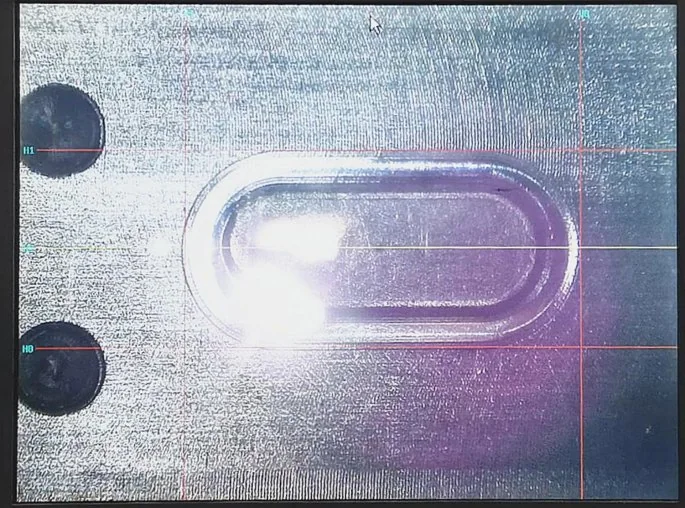
| Purpose | Beam spot check and live supervision of the weld |
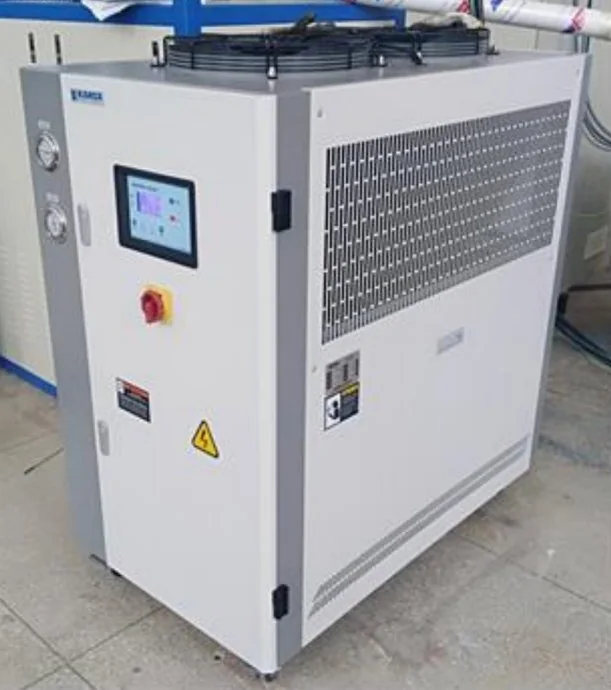
Water-cooled gun and power source
| Water temperature | ≤ 23 °C |
| Water flow | ≥ 30 L/min |
| Power supply | 3 phase |
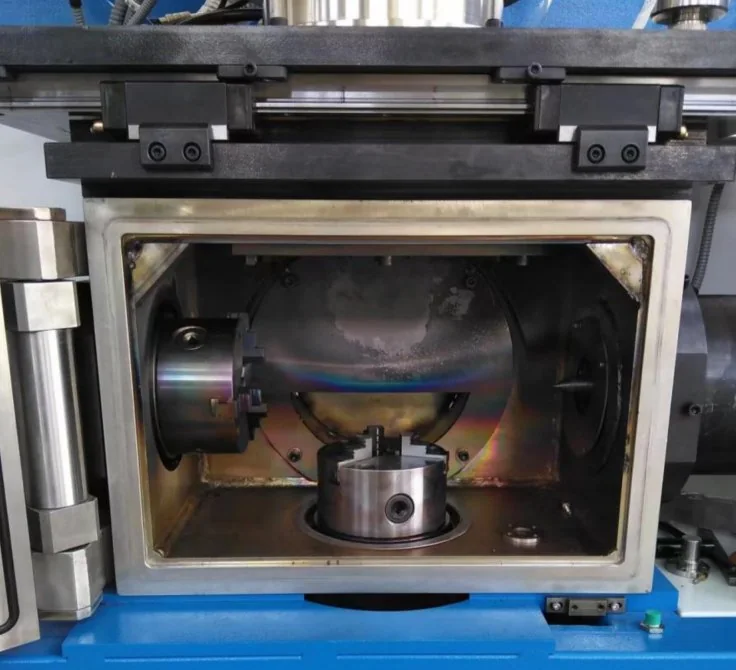
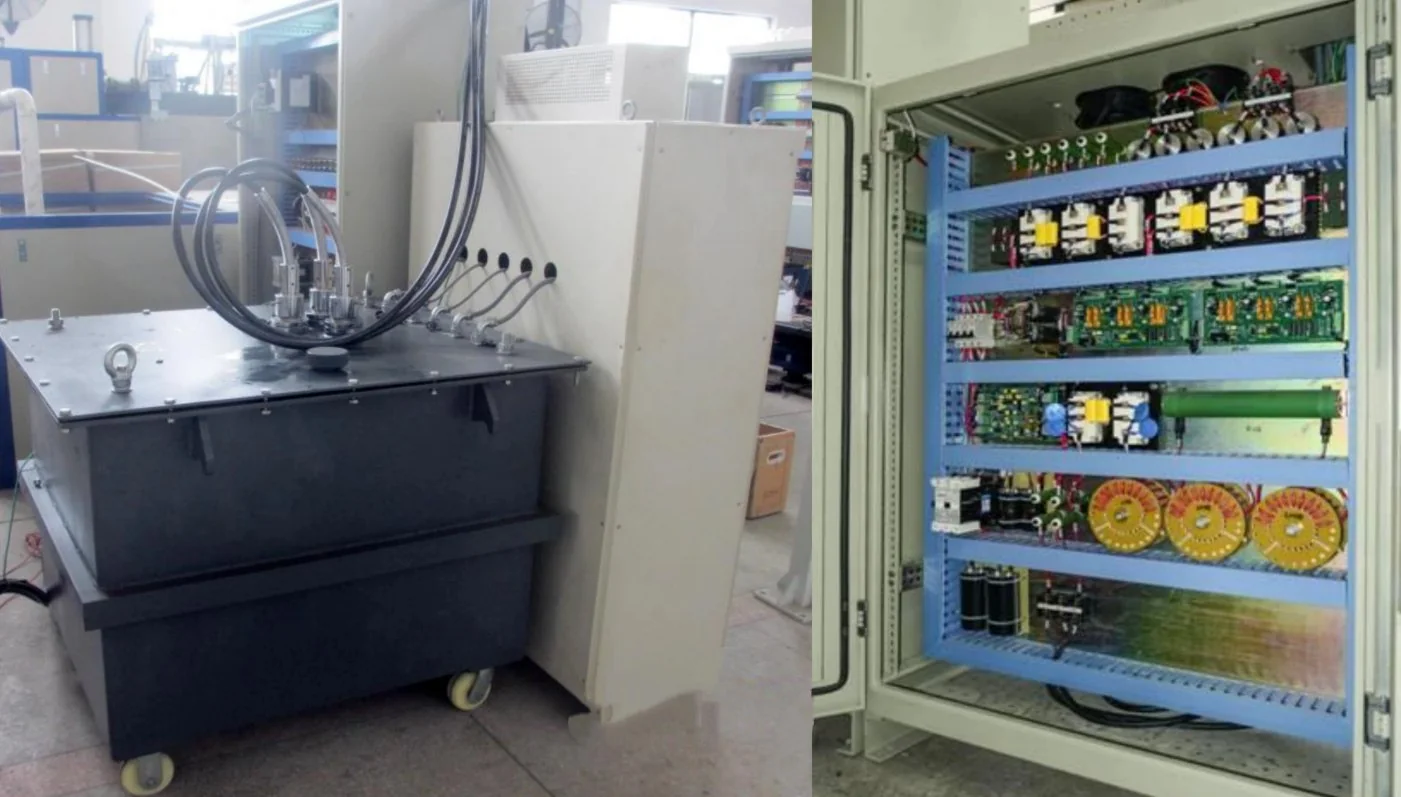
Photos from the build — vacuum chamber with rotary tables, HV cabinet, PLC rack, chiller and a finished seam under the microscope.


Six things that matter when your part has a deep, narrow, vacuum-tight joint.
A 6 kW beam at up to 60 kV welds 20 mm of stainless steel without pre-machining a V-groove or running multiple passes — one of the few processes that does this in a single shot.
The narrow seam means minimal distortion and a heat-affected zone measured in tenths of a millimetre, so post-weld machining and straightening drop away.
Welding below 5 × 10⁻² Pa removes oxygen from the process entirely. Reactive metals, titanium and copper joints come out clean with no shielding gas and no post-weld pickling.
Horizontal rotary table (0–30 rpm) with pneumatic tailstock for shafts and rings; vertical table (0–50 rpm) with a three-jaw chuck for discs. Run-out held within ±0.03 mm on both.
The gun chamber is pumped independently and isolated by a valve, so it holds vacuum while you vent and reload the work chamber — reloads cost only the 150-second chamber pump-down, not a full gun evacuation.
OMRON PLC with touch-screen HMI: stored welding programs, beam up/down slope control, scan frequency and amplitude, live readout of every parameter, plus interlocks and water/gas alarms.
Vacuum EBW is chosen where the joint must be deep, clean and dimensionally stable. These are the part families our customers bring to this machine.
What you prepare before the container arrives — and what we ship with the machine.
| Electric power | 380 V ±10% · 3 phase · 50 Hz AC |
| Max. load | 30 kW |
| Compressed air | 0.5–0.6 MPa |
| Cooling water | ≤ 23 °C, ≥ 30 L/min |
| Ambient humidity | ≤ 85% |
| Ambient temperature | 5–40 °C |
| Earthing resistance | ≤ 3 Ω |
Straight answers on the points that usually decide the order.
20 mm in stainless steel at full 6 kW gun power. Depth-to-width ratio exceeds 13:1, so a 20 mm seam is roughly 1.5 mm wide at the root. Carbon steel and copper reach comparable depths at lower power; send us the material and section drawing and we confirm the exact pass count.
No V-groove is required for most joints. Square butt faces with a clean machined finish are enough — the beam penetrates and produces the seam itself. That removes a machining step and the associated fixturing.
The chamber pumps down to better than 5 × 10⁻² Pa in 150 seconds or less. The gun chamber is pumped independently and stays under vacuum across reloads, so you only pay the chamber time each cycle, not a full gun evacuation.
Yes. A horizontal rotary table with a pneumatic tailstock handles shafts and rings at 0–30 rpm; a vertical rotary table with a three-jaw chuck handles discs at 0–50 rpm. Both run at ±0.03 mm run-out so seam position stays repeatable.
Chamber walls are ≥ 38 mm with X-ray leakage ≤ 0.25 mRem. The machine ships with an X-ray safety certificate signed by the authority, plus interlocked doors and automatic protection on fault conditions. Our team walks your EHS contact through the local registration requirements.
Most orders for an EBW cell also include one of these — same engineering contact, one shipment.

Six-axis dual-station cell for precision laser welding of thin-wall assemblies.

Drag-to-teach cobot for loading and unloading weld cells without programming skills.

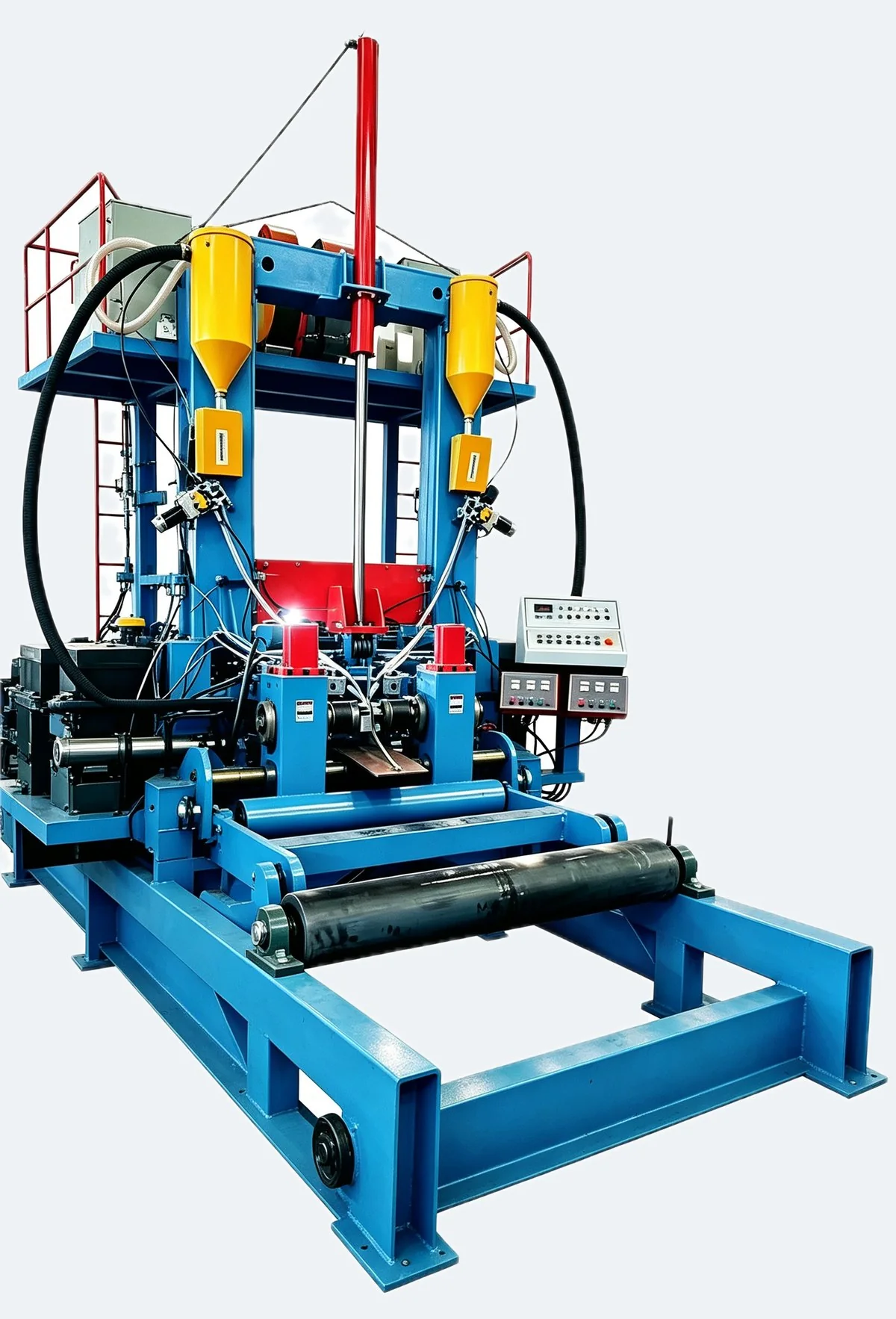
Fit-up, welding and straightening of H-beam sections in a single station.
Material, wall thickness, joint geometry and output per shift. An English-speaking engineer replies within one business day (Mon–Fri 09:00–18:00 GMT+8).