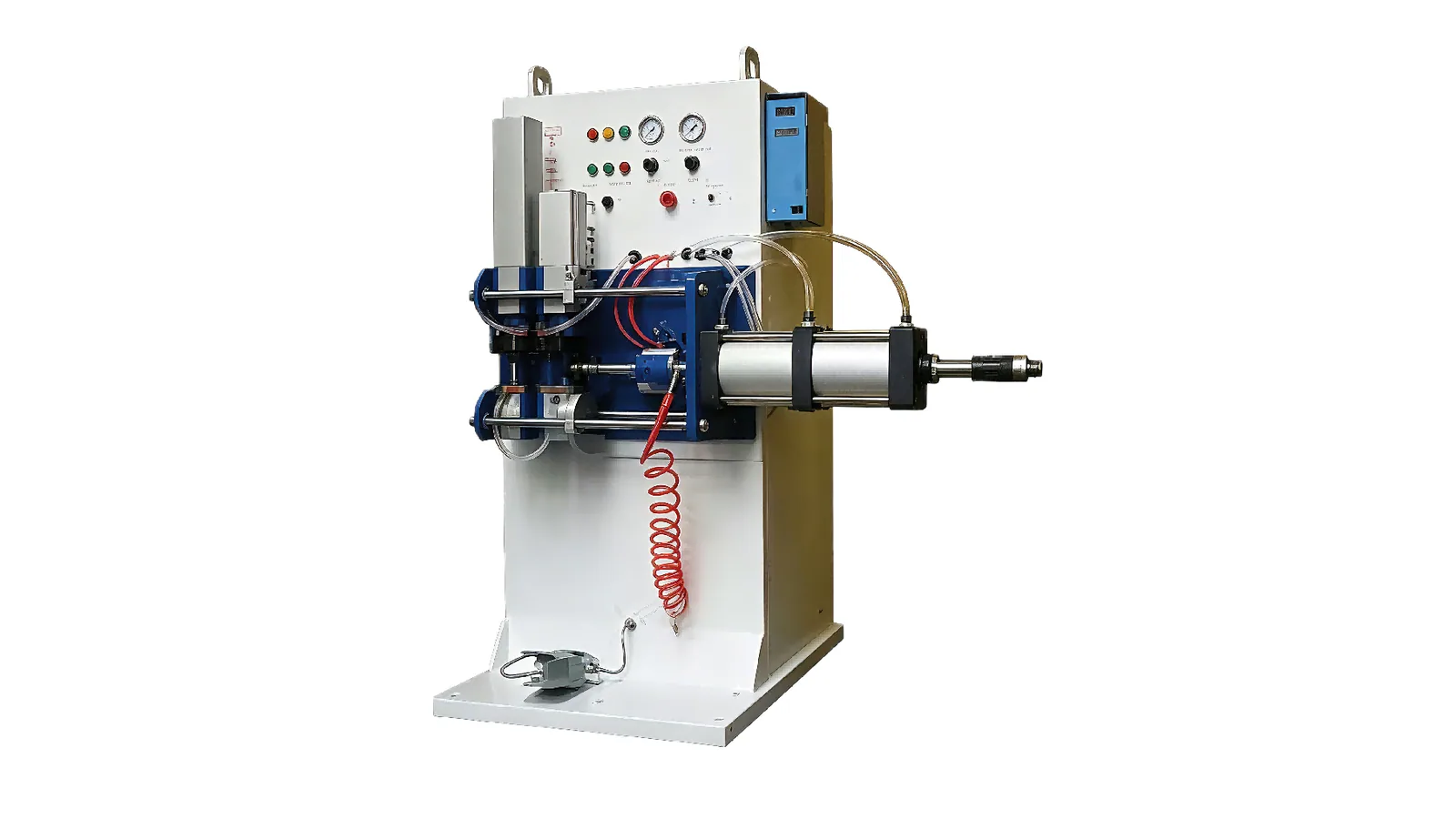
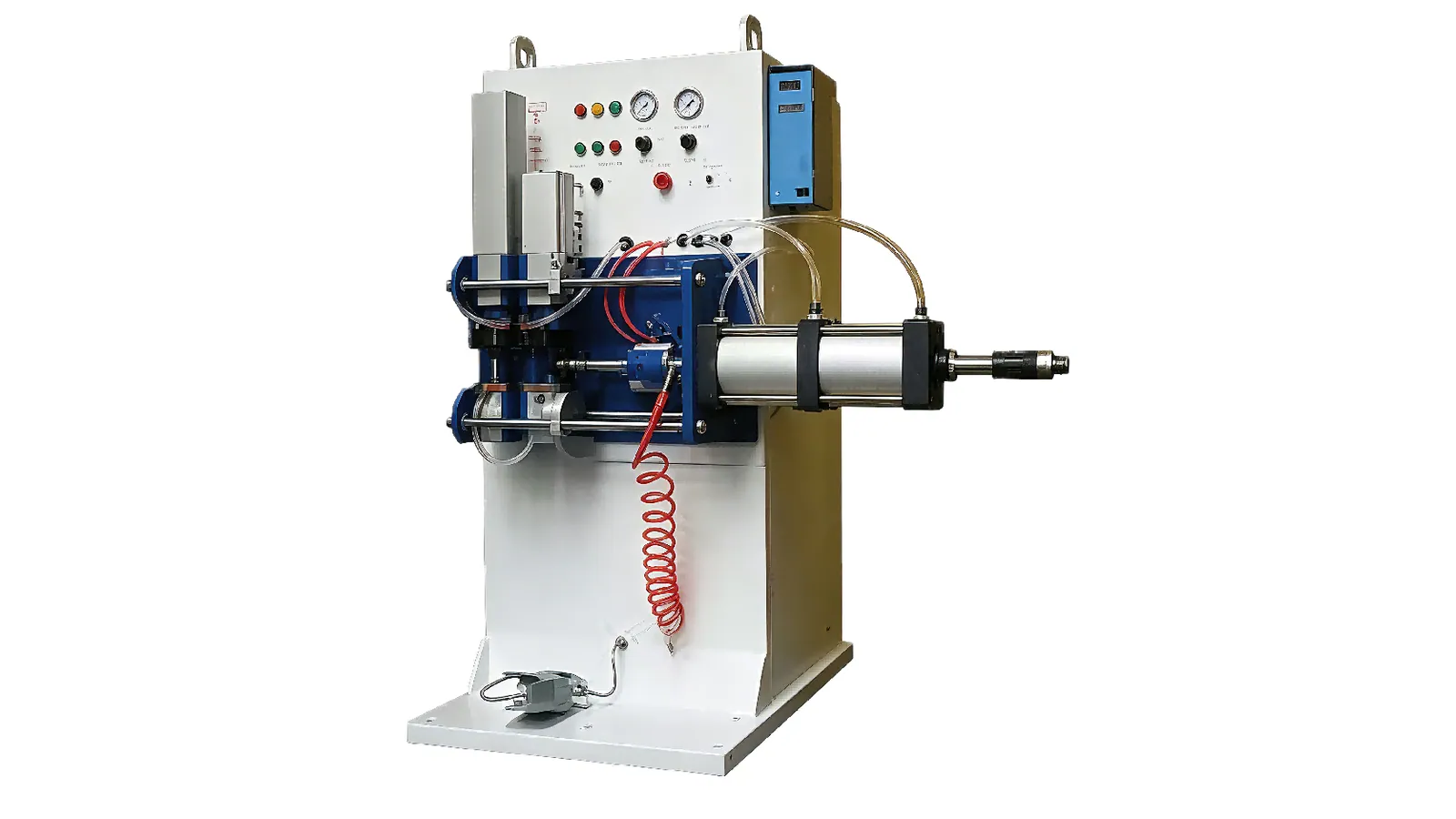
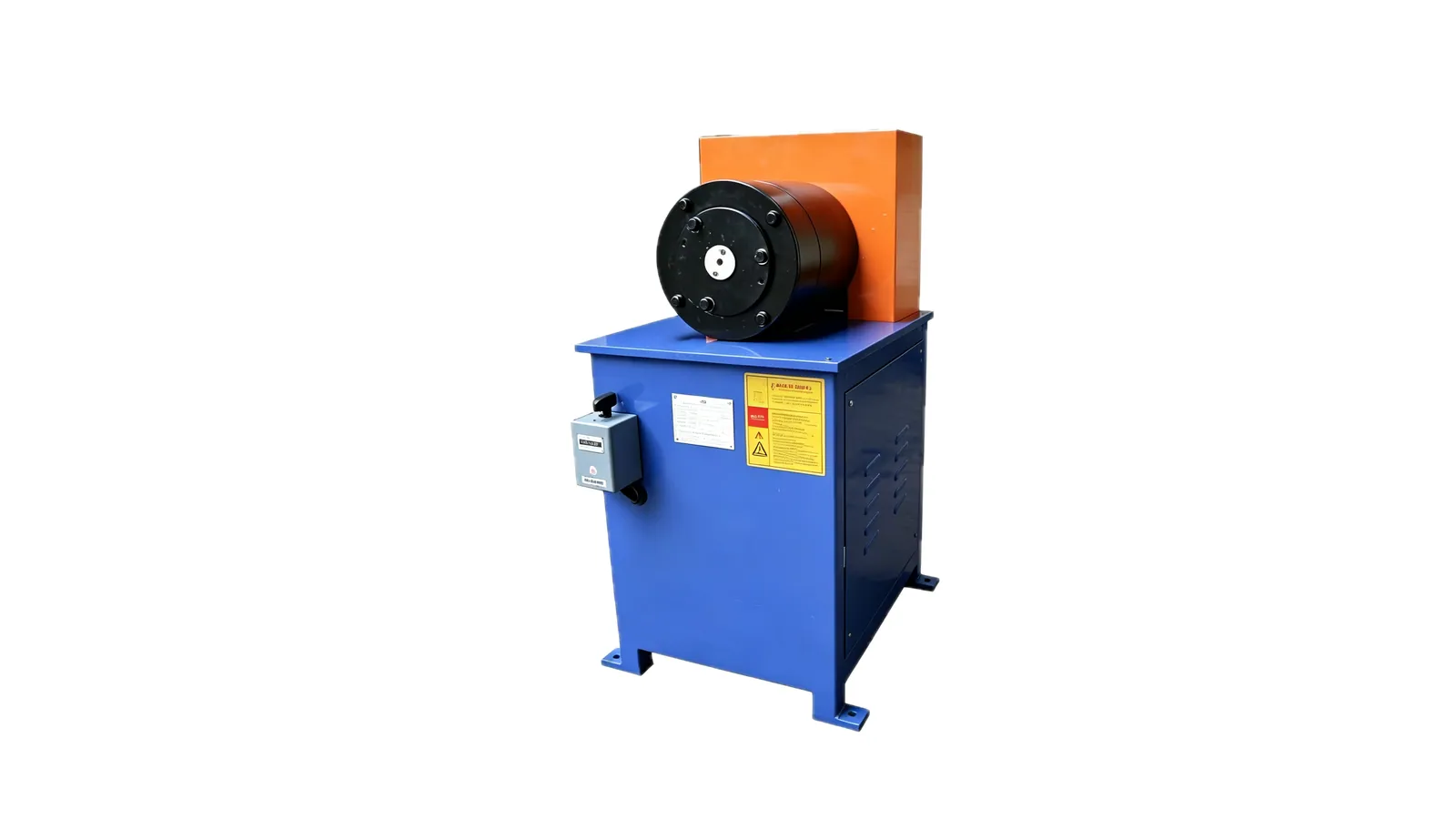
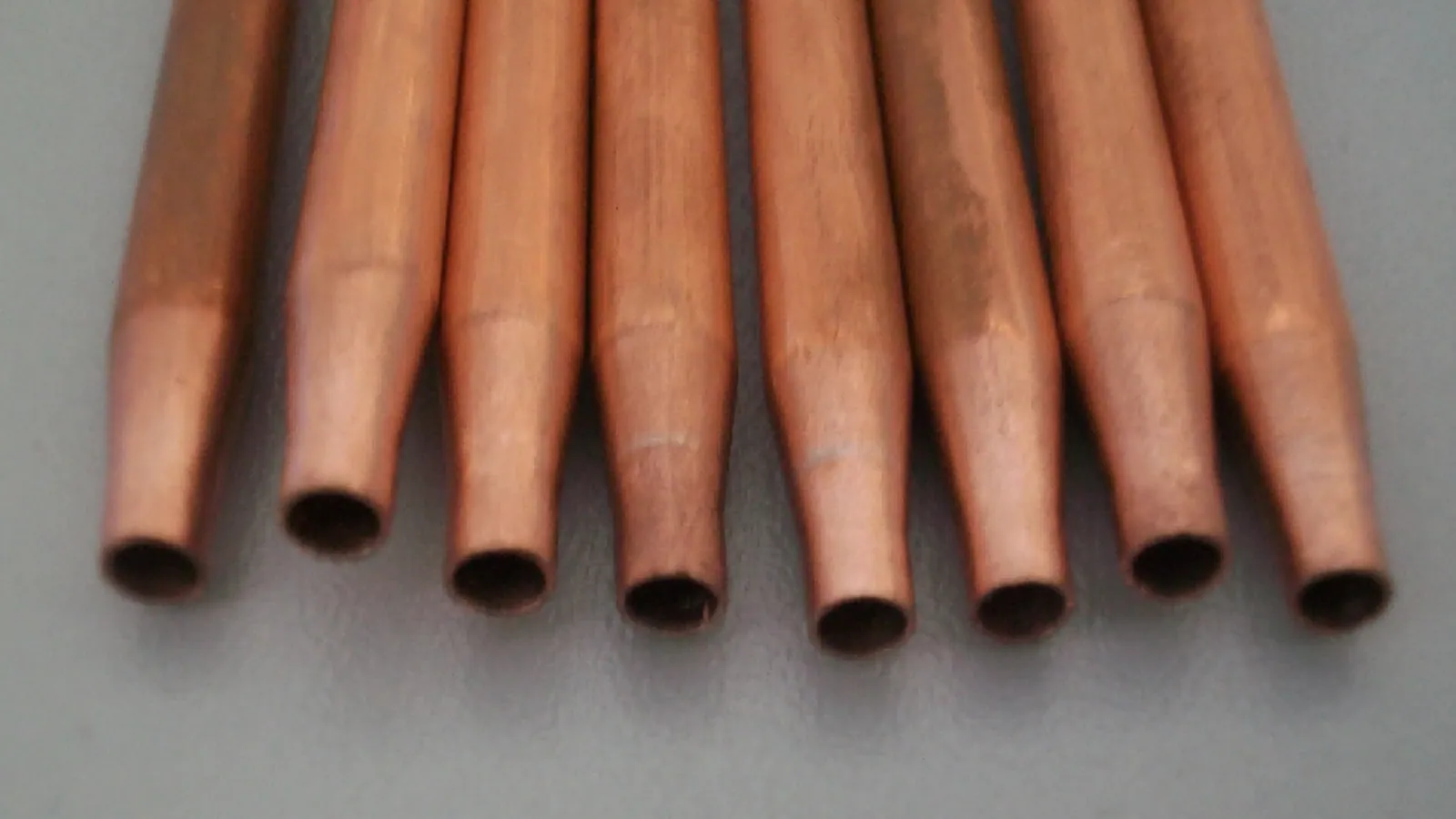
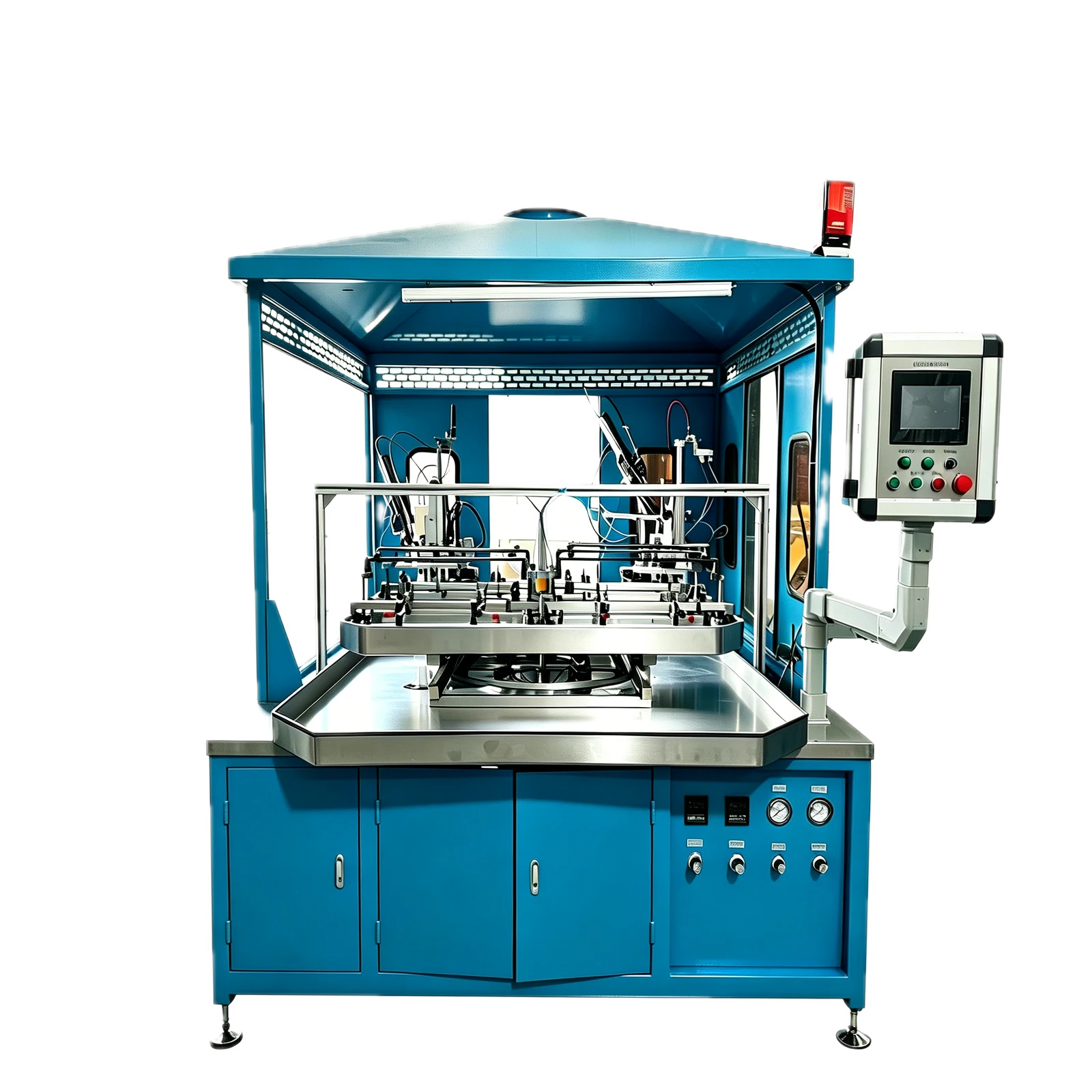
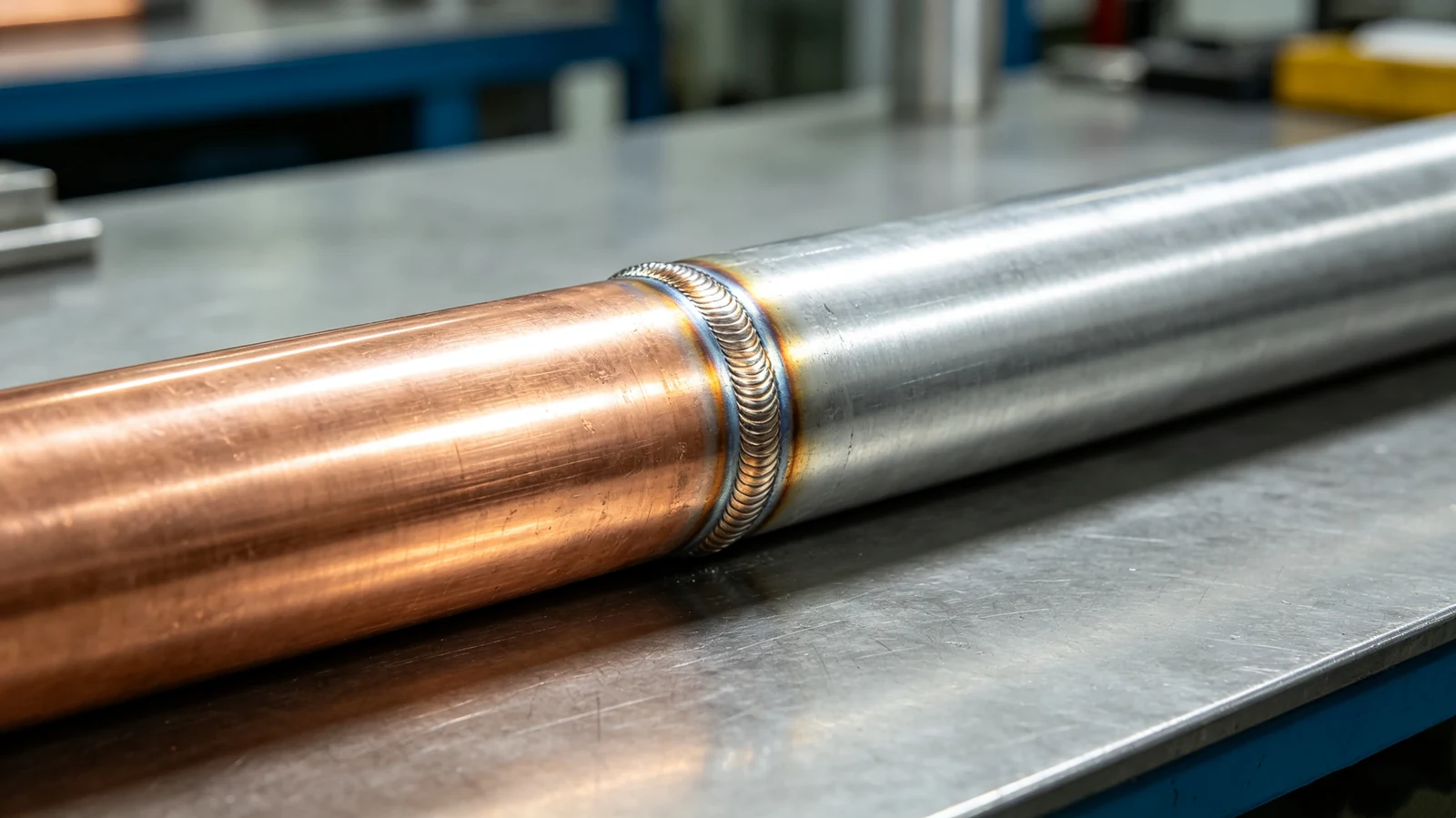
This machine joins copper tube to aluminium tube with a flash butt weld instead of a braze — a metallurgical joint, not a filler-metal joint. A 35 kVA secondary with 15,000 A short-circuit current upsets the two ends together under pneumatic clamping, so the seam comes out the same shape and quality every cycle. Tube range is φ6.0–9.52 mm on both metals, which is exactly the return-bend and coil-tube family in air conditioning and refrigeration. It runs with a Tube shrinker that rolls the copper end down so it slides into the aluminium tube before welding.

The numbers that decide whether this welder fits your tube family. Send us the tube OD, wall thickness and joints per shift — we confirm the clamp tooling, schedule count and cooling arrangement on the proforma invoice.
| Rated capacity | 35 kVA |
| Rated input voltage | 380 V |
| Rated frequency | 50 / 60 Hz |
| Max. short-circuit current | 15,000 A |
| Welded pipe diameter — aluminium | φ6.0–9.52 mm |
| Welded pipe diameter — copper | φ6.0–9.52 mm |
| Duty cycle | 50% |
| Machine weight | 350 kg |
| Clamping cylinder stroke | ≥ 30 mm |
| Lateral cylinder stroke | 5–25 mm, adjustable |
| Punch rod cylinder adjustment | 5–100 mm, adjustable |
| Control | PLC + dedicated microcomputer welding controller |
| Cooling | Forced water cooling; air storage tank in circuit |
| Paired shrinker | automatic copper tube rolling / shrinking machine |
* Specifications as supplied for this model. Final configuration confirmed on the proforma invoice.
Full data on the welder and its paired shrinker — the sheet your process engineer needs before the purchase order.
35 kVA transformer with 15,000 A short-circuit current
| Rated capacity | 35 kVA |
| Input voltage | 380 V |
| Frequency | 50 / 60 Hz |
| Max. short-circuit current | 15,000 A |
| Duty cycle | 50% |
| Voltage / current control | Secondary constant voltage + constant current |
| Weld process control | Dedicated microcomputer welding controller |
Aluminium-alloy cylinders, high-precision oil bearings, lathe-type lever
| Clamping cylinder stroke | ≥ 30 mm |
| Lateral cylinder stroke | 5–25 mm, adjustable |
| Punch rod cylinder adjustment | 5–100 mm, adjustable |
| Structure | High-quality aluminium-alloy cylinder + high-precision oil bearing + high-precision lathe lever |
| Action | Precise mechanical motion, no gas leakage path at the clamp |
φ6.0–9.52 mm on both copper and aluminium
| Copper tube | φ6.0–9.52 mm |
| Aluminium tube | φ6.0–9.52 mm |
| Clamp tooling | One set of moulds per tube size, quick change |
| Joint preparation | Copper end rolled down by the shrinker so it inserts into the aluminium tube |
Forced water cooling plus an air receiver for repeatable upset
| Cooling | Forced water cooling on the welding transformer |
| Air storage tank | In the pneumatic circuit to hold upset pressure steady |
| Optional chiller | Low-temperature circulating water chiller available as an option |
| Air supply | Clean, dry compressed air at 0.5–0.6 MPa (confirm on the proforma invoice) |
PLC with schedule storage per tube size
| Controller | PLC + special microcomputer welding controller |
| Schedules | Multiple schedule numbers stored by tube size, callable from the panel |
| Operator interface | Push-button panel with pressure gauges and weld indicators |
| Quality consistency | Secondary constant voltage/current plus air receiver keeps weld shape repeatable |
Rolls the copper end down to fit inside the aluminium tube
| Power supply | Three-phase 380 VAC, 50 / 60 Hz |
| Motor power | 2.2–7.5 kW |
| Tube diameter | φ4–35 mm |
| Action | High-speed rotation and beating to shrink the tube end |
| Result | Accurate inner and outer diameter, smooth surface |
| Moulds | Quick change for different sizes |
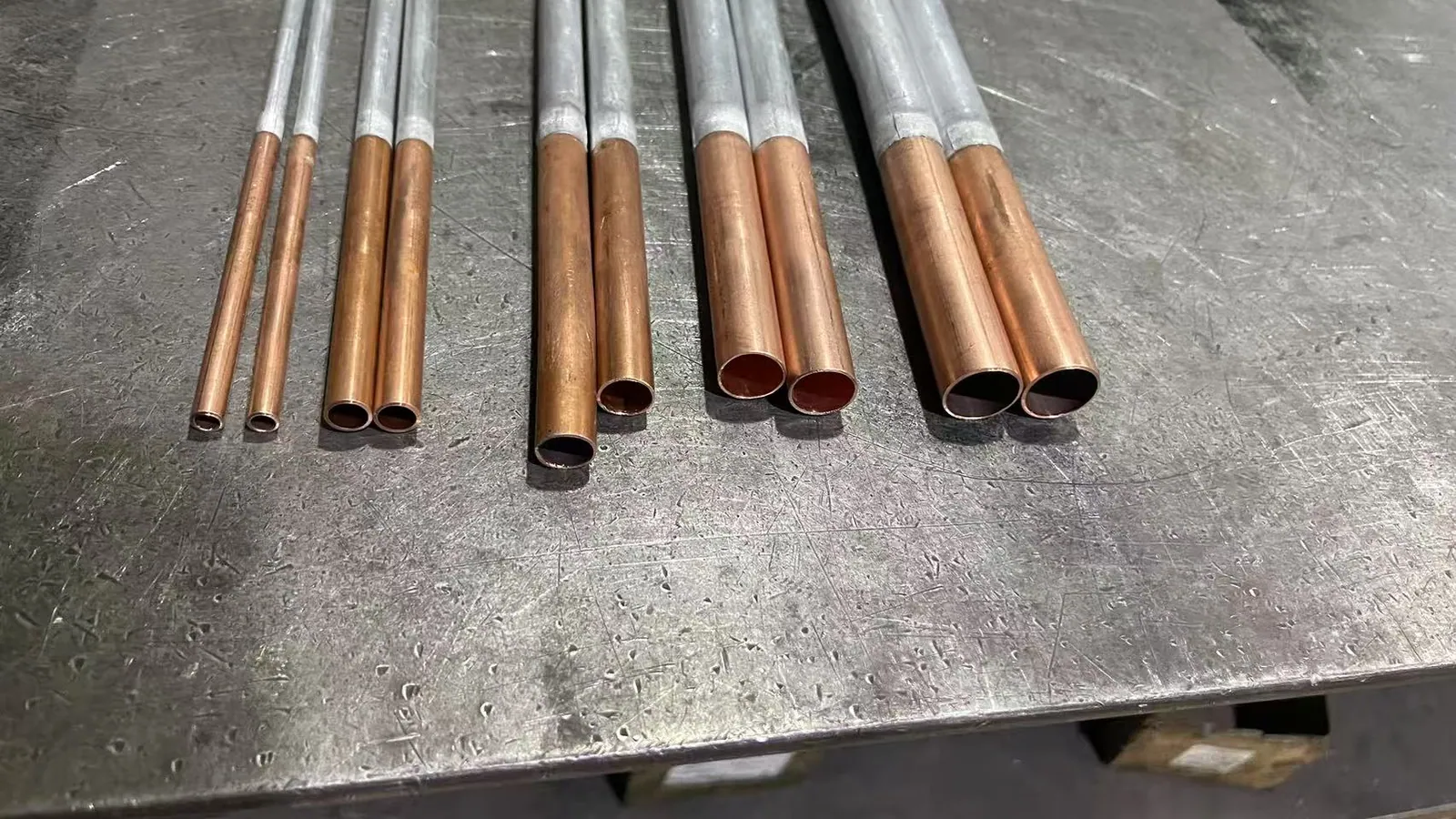
The welder, the paired tube shrinker and finished copper-aluminium joints.


Why a flash butt weld instead of a braze — and what that changes downstream.
Flash butt welding upsets the two tube ends together under current and pressure. There is no flux residue inside the bore and no brazing alloy to reflow, so the joint is not sensitive to a later oven cure or a pressure cycle.
Secondary constant voltage and constant current control, a high-precision lathe-type lever and an air receiver holding upset pressure together keep the weld collar geometry repeatable from the first piece of the shift to the last.
Different tube sizes get their own schedule number in the controller. The operator selects the size; the machine brings up the matching current and timing instead of re-setting the panel.
Aluminium-alloy cylinders with high-precision oil bearings give the ≥ 30 mm clamping stroke and 5–25 mm lateral adjustment without a gas-leak path at the clamp — one of the usual causes of scrap on this process.
The shrinker rolls the copper end down (φ4–35 mm) so it inserts cleanly into the aluminium tube. Shrinking and welding are matched, so the fit-up that decides weld quality is not left to hand tools.
Copper-to-aluminium transition joints in air conditioning, refrigeration and compressor production.
Power, air and water you prepare — and what ships in the crate.
| Electrical supply | 380 V · 3 phase · 50 / 60 Hz |
| Rated capacity | 35 kVA |
| Compressed air | 0.5–0.6 MPa, clean and dry |
| Cooling water | Circulating water for the transformer; chiller optional |
| Floor | Level concrete floor, machine weight 350 kg |
| Working clearance | Space for the tube shrinker beside the welder |
| Power supply | Three-phase 380 VAC, 50 / 60 Hz |
| Motor power | 2.2–7.5 kW |
| Tube diameter | φ4–35 mm |
| Function | Shrink tube ends for insertion before butt welding |
The questions that come up on Cu-Al transition joints.
A flash butt weld joins the two metals directly, so there is no brazing alloy or flux in the bore and the joint tolerates later heat cycles. It also removes the filler-metal cost and the operator skill that a good brace needs.
Yes, for this joint family. The copper end is rolled down by the shrinker so it fits inside the aluminium tube; that fit-up is what makes the upset weld repeatable. The set is quoted with one mould per machine.
φ6.0–9.52 mm on both copper and aluminium for the welder; the tube shrinker covers φ4–35 mm. Other sizes need different clamp tooling — send us the OD and wall thickness.
At 50% duty the machine is rated for alternating weld and cooling time in equal proportion. Give us your joint size and pieces per hour and we confirm whether that fits or a larger capacity is needed.
Secondary constant voltage and constant current control, a high-precision lathe-type lever, and an air receiver holding the upset pressure. Schedule numbers stored per tube size keep the settings from drifting between operators.
The transformer is force water-cooled. You can run from a plant cooling circuit or add the optional low-temperature chiller; running without adequate water flow shortens electrode and transformer life.
These machines usually ship with a Cu-Al welder — same engineering contact, one container.

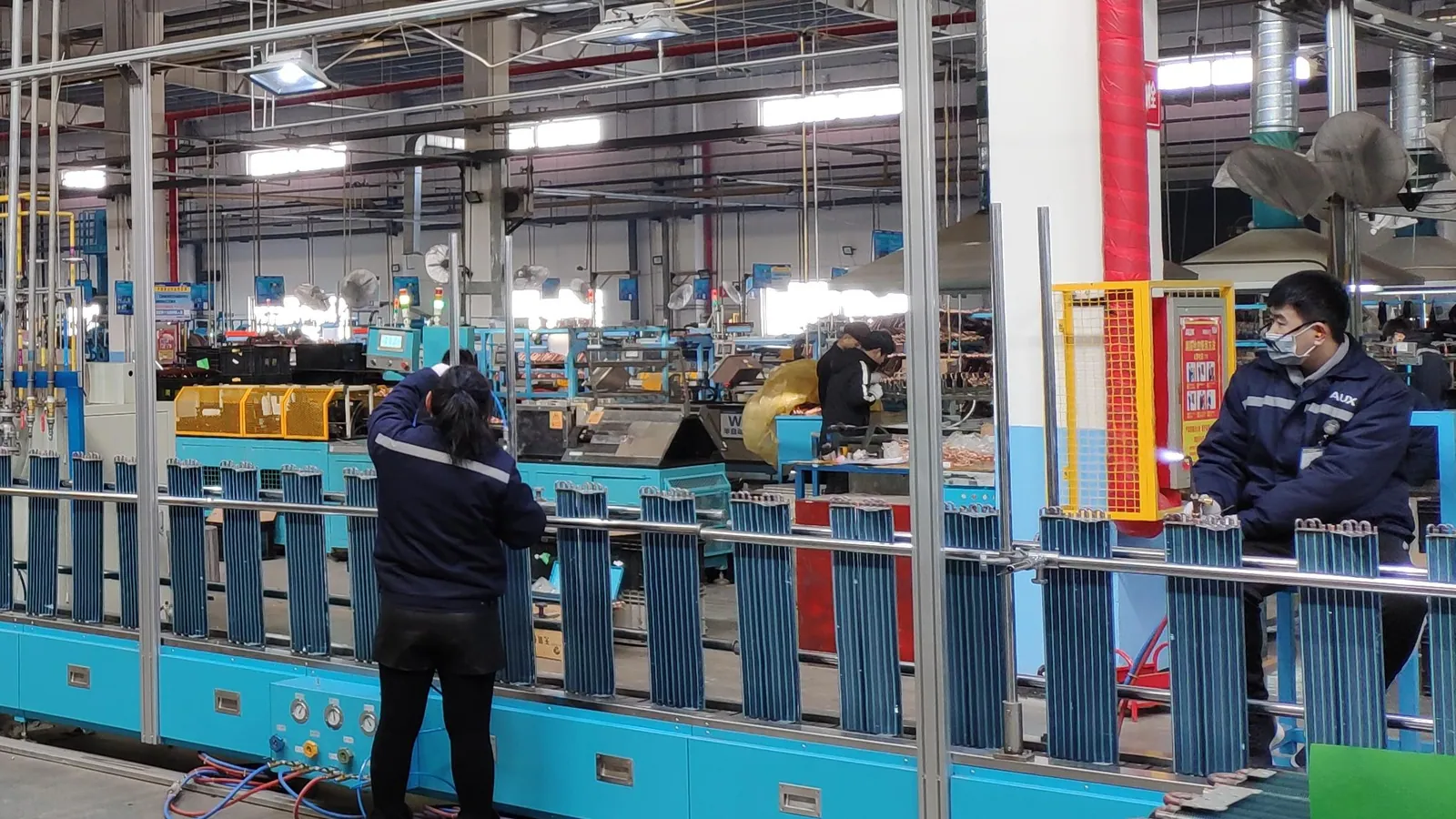
15 m continuous brazing line for coil return bends — the next process after the Cu-Al joint.

Rotary brazing station for copper manifolds and distributor assemblies.

Sample joints produced on this welder — ask for the sample set with your quote.
Tube OD, wall thickness, copper and aluminium lengths, and how many joints per hour. An English-speaking engineer replies within one business day with clamp tooling and schedule recommendations.